How Blockchain Verification Systems Are Altering Trust Protocols in Networked Bingo Operations
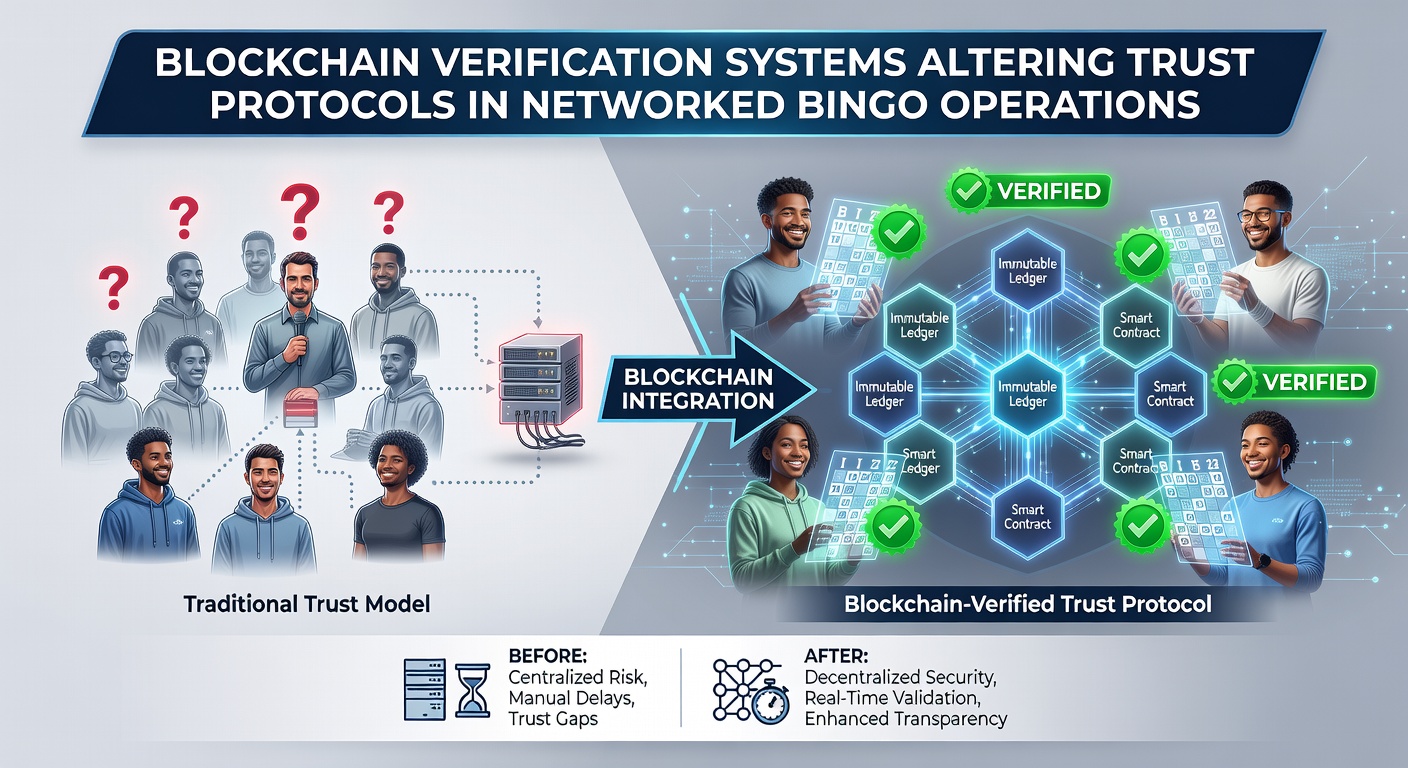
 Networked bingo operations rely on synchronized random number generation and player transaction tracking across multiple servers and jurisdictions. Blockchain verification systems introduce distributed ledgers that record each draw outcome and wager settlement as sequential blocks linked through cryptographic hashes. These records become tamper-evident once confirmed by network consensus mechanisms such as proof-of-stake or delegated proof-of-authority. Operators integrate smart contracts to automate payout calculations immediately after a verified draw completes. The contracts execute only when predefined conditions match the immutable ledger entries. This process reduces reliance on single-point auditing teams because participating nodes validate the same data independently.
Core Mechanisms Driving Verification Changes
Each bingo ball selection or electronic ticket generation receives a timestamped hash stored on the chain. Subsequent blocks reference prior hashes, creating chronological chains that auditors can trace without accessing proprietary operator databases. Data indicates that platforms adopting these systems report verification times dropping from hours to minutes during peak traffic periods.
Multi-signature wallets hold prize pools and require approvals from several independent validators before releasing funds. Network participants include operators, regulators, and third-party auditors who hold partial keys. This setup distributes authority and limits unilateral control over fund movement.
Regulatory and Operational Adaptations
Authorities in multiple regions have begun examining how these ledgers satisfy existing transparency requirements. The Malta Gaming Authority published guidelines in 2024 outlining acceptable uses of permissioned blockchains for gaming record-keeping. Similar frameworks appear in discussions from the Australian Communications and Media Authority, which evaluates cross-border data integrity for licensed operators.
Implementation often starts with pilot programs limited to specific game variants. One study from the University of Nicosia examined a European bingo network that logged over 2.4 million draws on a private blockchain during a twelve-month trial. Results showed a 97 percent reduction in disputed outcomes compared with the prior centralized system.
Player-Facing Trust Indicators
Participants receive cryptographic receipts containing draw seeds and outcome hashes. These receipts allow independent verification through public explorer tools or operator-provided APIs. Observers note that such transparency tools appear most frequently on platforms handling high-volume 75-ball and 90-ball variants across multiple countries.
Seasonal traffic spikes, including those observed around major holidays, test the scalability of consensus algorithms. Networks using sharding techniques partition transaction loads so verification continues without bottlenecks. Figures from industry reports reveal average block confirmation intervals remaining under eight seconds even during events exceeding 150,000 concurrent sessions.
Emerging Developments Through 2026
Industry working groups scheduled technical workshops for May 2026 to standardize data formats for bingo-specific smart contracts. Participants include software providers and regulatory observers from Canada and the European Union. The sessions aim to align ledger structures with existing random number certification standards.
Interoperability protocols under development would permit different bingo networks to reference each other's verified draws when players transfer balances between platforms. Early tests focus on hash compatibility rather than full chain merging, preserving each operator's control over game rules while sharing verification history.
Conclusion
Blockchain verification systems continue to embed cryptographic proof into the operational backbone of networked bingo. Distributed ledgers replace centralized logs for draw outcomes and fund movements while smart contracts handle conditional executions. Regulatory bodies across regions adapt oversight procedures to accommodate these records, and technical working groups prepare standardized approaches ahead of 2026 milestones. The resulting architecture maintains chronological integrity across jurisdictions without requiring constant central reconciliation.